Our Writing Curriculum
For further details please see our Curriculum Overview linked here
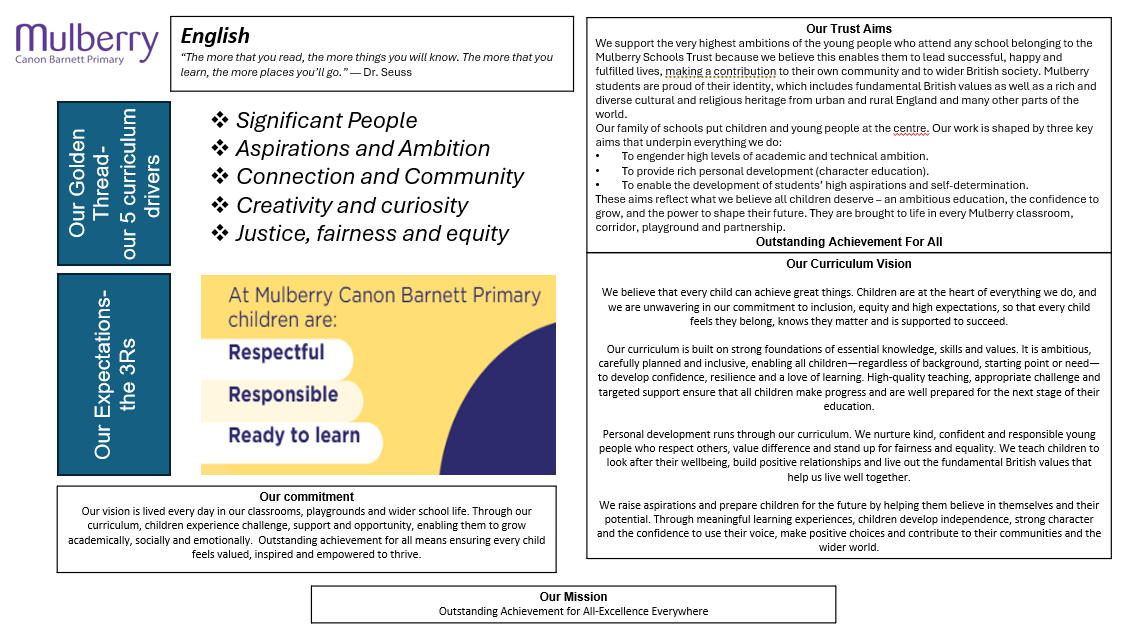
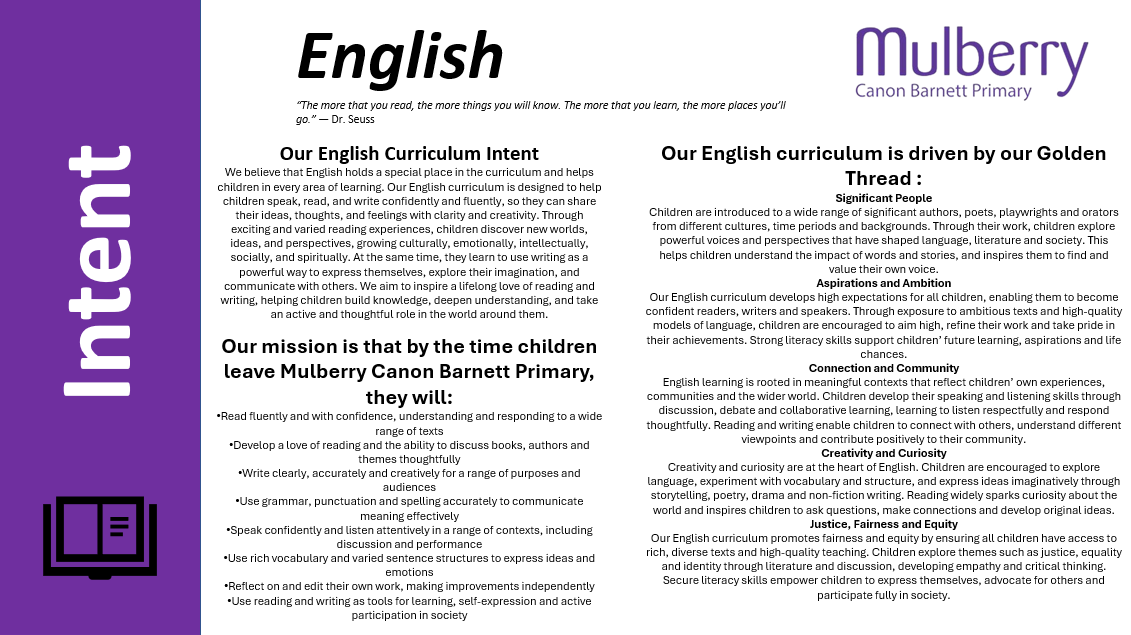
Writing is a core part of our curriculum, enabling children to communicate clearly, express ideas creatively, and engage confidently across all subjects. Our writing curriculum is built around three distinct and complementary strands: Learning to Write, Writing to Learn, and Writers for Life. Together, these ensure that all children, whatever their starting point, develop the skills, confidence, and independence to become capable and expressive writers.
Learning to Write
In the early stages, children focus on learning to write, developing the foundations of handwriting, spelling, sentence structure, and early composition. We follow the Read Write Inc. (RWI) programme, which supports both reading and writing by teaching children to encode sounds into letters and words, helping them write accurately and confidently from the start.
In EYFS, children have many opportunities to develop fine motor skills and early writing, including Daily Dough Disco, threading, mark-making, and other hands-on activities that build strength, coordination, and control. These experiences provide the physical foundation for handwriting and help children enjoy creating letters, words, and early sentences.
As children progress, they take part in daily transcription sessions, learning to form letters correctly, apply phonics knowledge, and develop fluency and accuracy in their writing. Children who need additional support are quickly identified and receive targeted, timely intervention, ensuring all pupils can keep up, gain confidence, and make consistent progress.
Writing to Learn
As children gain basic writing skills, the focus shifts to writing to learn. Pupils are taught to write with increasing fluency, accuracy, and purpose across a wide range of genres and subjects.
Writing lessons are carefully structured to support progression and confidence. Children listen to, discuss, and explore high-quality texts, building understanding of story patterns, language, and structure. Teachers model writing explicitly, demonstrating how to plan, compose, and revise sentences and paragraphs. Children then participate in shared and guided writing activities, applying new skills with support and developing strategies for organising ideas, using precise vocabulary, and varying sentence structure.
As children grow in confidence, they are supported to write independently, planning, drafting, and editing their work, applying skills learned in class to new contexts and genres. Writing is embedded across the curriculum, allowing children to communicate ideas clearly in all subjects, develop critical thinking, and express creativity. Handwriting and spelling remain a key part of these lessons, ensuring that technical accuracy grows alongside creativity and expression.
Children are encouraged to plan, draft, revise, and edit their work, applying skills in meaningful contexts. Writing is also integrated across the curriculum, allowing children to communicate ideas effectively in every subject while developing creativity, critical thinking, and expression. Targeted teaching and small-group support ensure that every child can progress and achieve ambitious outcomes.
Daily handwriting/spelling sessions are intentionally built into the timetable to give children regular practice and rehearsal time to be able to write clearly, correctly, and confidently.
We carefully map out the purpose, audience, form, and content for each writing unit to ensure that children develop strong, purposeful communication skills:
P – Purpose
We think about why we are writing.
A – Audience
We think about who will read it.
F – Form
We choose the type of writing, like a story, letter, or report.
T – Text
We use a stimulus, like a book, picture, or video, to inspire our writing.
We focus on four key purposes of writing across key stage 1 and key stage 2—from entertain, inform, to persuade and discuss—so that children develop the skills to write confidently for different reasons, audiences, and situations as they progress through school.

Writers for Life
We are committed to developing writers for life and believe that writing is for everyone. Our curriculum encourages children to see themselves as confident, capable writers, able to communicate effectively, express ideas creatively, and engage purposefully with different audiences.
Children experience a wide range of writing opportunities beyond the classroom, including publishing their work, and contributing to school displays and newsletters. Each term, we celebrate creativity through our Awesome Author initiative, recognising children who have produced outstanding writing. Pupils can also take part in writing competitions, giving them the chance to share their work with a wider audience, develop pride in their achievements, and experience the excitement of real-world writing challenges.
We celebrate writing through author visits, workshops, and school events, helping children take pride in their work and develop a sense of accomplishment. Through the combination of structured skill development, daily handwriting and spelling practice, meaningful writing opportunities, and rich experiences, all children are empowered to leave our school as confident, articulate, and lifelong writers.
Writing Expectations
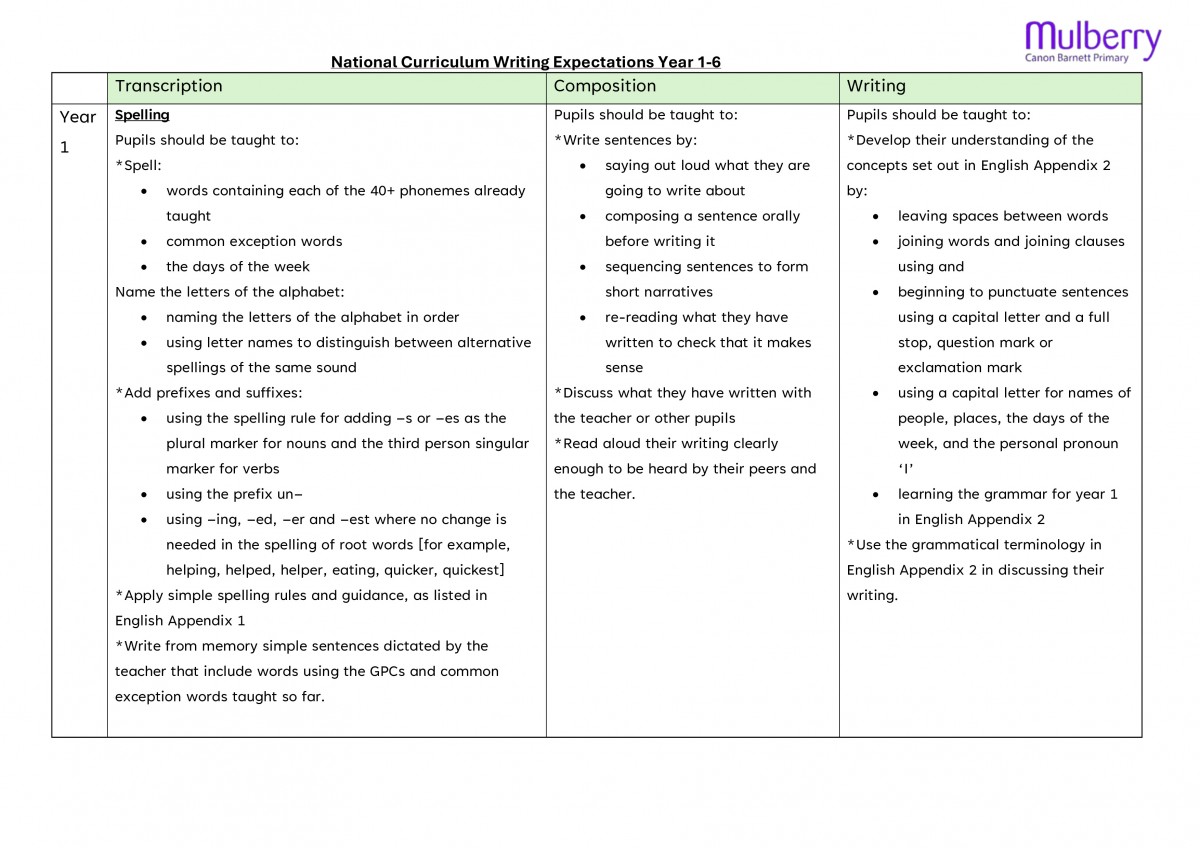
Handwriting Progression of Skills
Contact us
For more information on our school curriculum please contact us at admin@mulberrycanonbarnett.org
Email subject: Curriculum Enquiries
Alternatively, please contact a member of our office team who will guide you to the most appropriate member of staff- this may be the school senior Curriculum, Data and Assessment Lead, our EYFS Lead, KS1 Phase Lead, KS2 Phase Lead or an individual subject lead.